Sunday, November 8, 2020

Exercise Is Good For Your...Character!


As I completed my Dash for Dignity race, (okay..I admit it...I only walked and didn’t run!), I watched proudly as our Yavneh students came out to support Yad Leah.  The exercise is good for them...and I don’t just mean exercise of their physiological muscles. They were exercising their chesed and compassion muscles. As Dr. Ritchie Davidson, of University of Wisconsin stated when discussing acts of kindness,   “It’s kind of like weight training, we found that people can actually build up their compassion ‘muscle’ and respond to others’ suffering with care and a desire to help.”  

Where are these “compassion muscles”?  They are actually neural pathways in the brain. Neuroplasticity asserts that our brains are shaped and changed by our experiences.  Our behaviors can in essence rewire our brains and help form new neural connections based on what we do over and over- for good and bad. 


(Here is a selection from my column a few weeks ago demonstrating that the Jewish tradition already knew about this neuroplasticity: The importance of acting out scenarios and situations so that they are ingrained and part of our psyche is stated clearly in the Sefer HaChinuch Mitzvah 16.   “  כי אחרי הפעלות נמשכים הלבבות “ “A person is formed by his actions.”  Our external actions affect our inner feelings and reactions.  One might think that how you feel inside affects how you act.  The Sefer HaChinuh highlights an important psychological phenomenon- that it is the opposite-  the way we act often affects how we feel. As he explains, “You must know, that a man is acted upon according to his actions; and his heart and all his thoughts always follow after the actions that he does - whether good or bad... And from that which is not for its own sake comes that which is for its own sake [as opposed to being for personal gain]; for the hearts are drawn after the actions.”  


We know that one needs to practice, practice, practice as noted in the Rambam Hilchot Deot, 1:7. The Rambam asks how can we ensure that positive character traits become part of who we are- even ones that we do not naturally have and need to work on?  “How can one train himself to follow these temperaments to the extent that they become a permanent fixture of his [personality]? He should perform - repeat - and perform a third time - the acts which conform to the standards of the middle road temperaments. He should do this constantly, until these acts are easy for him and do not present any difficulty. Then, these temperaments will become a fixed part of his personality.”  We need to stress to our children that every skill is at first difficult, but becomes easier with practice. )


Teenagers need to exercise this compassion muscle more than others as they are neurologically more  “me- first” than adults. As Jeanna Bryner says in her article “Brain Scans Show How Teens Are More ‘Me-First’ Than Adults,”

 A study involving a trust game revealed that 12- to 14-year-olds use a part of their brain linked to self-oriented thought and what's-in-it-for-me thinking when they make decisions about whether to share with others.”

  Even when sharing with others, the young adolescents in the study were “engaged in self-referential thoughts.”

In addition, activity in the brain's temporo-parietal junction (TPJ) increased with age. This area, where the temporal lobe (just above your ear) and parietal lobe (toward the back of your head) meet, is thought to be important for shifting attention between one's own and other perspectives and for inferring the intentions of others, the researchers wrote.” 

 As they grow older their brains develop allowing them to think of others as well.  


We need not wait for that neurological development, but can work on helping our children think beyond themselves. As Ema Alva writes in “Five Ways to Help Teens Think Beyond Themselves,”  the ability to think beyond themselves is linked to finding a sense of purpose.  “Purpose is a part of one’s personal search for meaning, but it also has an external component, the desire to make a difference in the world, to contribute to matters larger than the self,’ write psychologists William Damon, Jenni Menon, and Kendall Bronk. Some researchers call this external component the beyond-the-self dimension of purpose: Why am I here? What role can I play in the lives of those around me?”


Involving our children in chesed and volunteerism is one way to help them see beyond themselves. In fact, in our 7th grade Advisory we start the year with the story of pre-teen Austin Gutwein who raised millions of dollars for orphans in Africa through creating his program Hoops of Hope.  His book is called: Take Your Best Shot: Do Something Bigger Than Yourself.  


What are the best ways to help your teen find something beyond themselves? One way is to identify his/her passions and then encourage him/her to volunteer in that arena. Does she love basketball? Have her volunteer to be a big sister to a younger girl and teach her basketball skills.  Three other simple and seemingly obvious ideas were noted by Nathan French in his article “5 Ways to Live Less Selfishly.”  We should remind our children to  a. Listen better. b.  Serve yourself last. c. Consciously give compliments to others. Compliments force you to focus on others.  


Another way we as parents can encourage selflessness is by praising our children for being selfless.   I cannot say it better as Dr. Michelle Borba said it in her book Unselfie, when she speaks about the Family Reunion test that she routinely asks parents. 

 .“...we must get kids to switch their focus from ‘I, Me, Mine’ to ‘We, Us, Our, Ours.’...Pretend it’s twenty- five years from now and you’re at a family reunion eavesdropping on your now-grown kids discussing their childhoods. How are they describing your typical behavior? And what do they remember as the ‘most important messages’ you told them as kids? 

She notes that upon thinking about the “Reunion” parents worry that they have focused too much on achievement and too little on kindness and empathy. At the end of the day, instead of asking (or only asking), “What grade did you get? What did you learn today?”  We should be asking, “ What nice thing did you do for someone today?” Not only do we need to  model kindness, but we need to  reflect on kindness and praise kindness in conversations with our children. 


No wonder the Yavneh Chesed team is essential! And, what a perfect week to launch the 2020-21 Yavneh Academy Chesed Team!  This week’s parashat hashavua features Avraham Avinu- Ish Chesed- known for his chesed to all.  And, his welcoming the angels despite recovering from surgery showed how nothing could keep him away from exercising those chesed muscles. 


Rabbi  Shlomo Wolbe, in Alei Shor, page 91, discusses the connection between chesed and yirah- awe/fear of G-d as noted in  the Gemara in Sukkah 49b.  They do not seem to connect at all!   Rabbi Wolbe says they both challenge a person to realize the he/she is not the only one in this world 

There is one root in the soul to both of these attributes.  There are those who see beyond themselves, and there are others who do not see anything beyond themselves.  The one who sees only himself is only able to feel that which he is lacking, and therefore he lives only for his own benefit.  One who doesn’t notice others is incapable of seeing a person in need, nor will he take note of his Creator.


Someone who is selfish and egocentric cannot see others nor can he “see” G-d.  Both yirah and chesed can only be achieved if a person can see beyond himself.  


As we sadly heard of the passing of Rabbi Lord Jonathan Sacks, zt’l, just this past Shabbat, it is fitting to end with his words about achieving true joy.  In his article “The Pursuit of Joy”  he asserts that unlike Aristotle, who stated that happiness is the ultimate goal to which humans aspire, Judaism does not think it so.  Simcha- joy is a central value of Judaism, which is not happiness. Rabbi Sacks continues to point out that happiness is the state of an individual.  Simcha- joy “is never about individuals...  It is always something we share...It has to do with a sense of connection to other people and or to God.  It comes from a different realm than happiness… It is the exhilaration we feel when we merge with others...The pursuit of happiness can lead, ultimately, to self-regard and indifference to the suffering of others...Not so, joy.  Joy connects us to others and to God.”  The only way to lead our children from the path of selfishness and self-regard to the path of joy is by exercising those chesed muscles! 


When we started the Chesed team three years ago I maintained that it was similar to other teams- the students got t-shirts, had chesed meets and here I add they also get much needed exercise... of their chesed muscles!  


Advisory Update:


Sixth Grade:  Students began learning how to schedule their evenings and prioritize.


Seventh Grade:  Students began implementing the skills of empathy by delving more into the plight of the homeless as individuals. 


Eighth Grade:  Students had a “How Are You Doing” lesson with a  chance to discuss how 8th grade was going for them. 


Sunday, November 1, 2020

Agreeing to Disagree

         With the election upon us our Social Studies teachers have been working hard to ensure that our children are educated and up to date on the issues.  Those of you who already know me know that I am always on the lookout for “teachable moments.”  Teachable moments can appear anywhere- from a TV show, a book, a life situation, or even current events.   This upcoming election is full of teachable moments. One such moment is a discussion about how to agree to disagree. Elections do bring up true disagreement, which can often be disrespectful and caustic. 


What a “teachable moment” to talk about the art of disagreeing with grace!  We do want our children to assert themselves and not give in if they disagree.   But, we do want them to disagree respectfully.  Adolescence is a time that we want them to assert themselves and present their views in a calm and reasonable manner.   

  1. The first rule of disagreement is that we never engage in a disagreement when either party  is upset.  Set a time for discussion once everyone has cooled down. 

  2. Face to face- no social media or texting.  Short messages can be easily misconstrued.  The agitation and upset can often escalate as one person waits for the other to respond, in the meanwhile imagining all the horrific things that may be happening.  And, one way we often deal with an argument is by ignoring the text from the other who is upset. That just escalates the situation.  People often text or post when they are multitasking and when they are not truly focused and may write something they don’t mean.  Face to face disagreements are essential as people often use social media or texting to avoid facing the real issue.  We also know the importance of empathy and understanding the other's position. A face to face conversation is the only way to truly get a sense of what the other is feeling.   

  3. Face to face means looking at the person.  This is not always comfortable, but a skill that can be practiced. 

  4. Watch tone of voice and body language. Often we think our words are non-confrontational, but our tone or body language are. 

  5. LISTEN!  Do not interrupt when others are speaking.   Often we think we know what the person is going to say before he/she says it and we interrupt.  We can practice active listening with our children. 

In our 7th Grade Advisory program we teach them the steps of Active Listening: 


  1. Look at the other person.

  2. Focus all your attention towards what the person is saying.  

  3.  Indicate you are listening  by saying things like “uh huh,” “really?” or “yes” in the right places.

  4. Don't interrupt, correct mistakes, give advice or tell your own story.

  5.   Give the person time to speak. When there's silence for a moment, don't immediately fill the space.

  6. Repeat/ restate what you have heard ex. “So, your problem is that I never clean my room?”

  7. Validate what they said- letting them know you get what they are saying. ex. “That must have been really awful.”


6.  Do make it clear that you understand what the other person is feeling and maybe even point out aspects of their argument with which you agree.  Avoid saying he/she is wrong, but instead say that you agree to disagree. 

7. Know when to end the conversation. 


The key to all these skills is to practice them, when not in the state of disagreement, so that they are more natural when needed. And, of course, as I always note, to model them ourselves. 


Danielle Greenbaum Davis, in her article “What The Talmud Can Teach Us About How To Argue With Each Other”  that the Jewish people have a manual for how to “rationally, practically and productively disagree with one another...It’s called the Talmud...Each page has one thing in common:All feature polite, meticulous and creative styles of argument...The Talmud is filled with interlocutors who find themselves on opposing sides of a debate. Yet these opponents don’t work as enemies or make ad hominem attacks; they come off as collegial sparring partners, testing ideas for weaknesses and inconsistencies, aiming not to win but to find truth.”


Greenbaum continues that in today’s society when someone says or tweets something that to others does not make sense, the others pounce on it, condemn it and immediately dismiss it.  In the Talmud, no matter how farfetched the idea, the “arguers of the Talmud look inward, wondering whether they might be missing something.” 


The prime example of a disagreement in the Talmud is that of Hillel and Shammai.  The Mishna in Avot 5:17 states: 

כָּל מַחֲלֹקֶת שֶׁהִיא לְשֵׁם שָׁמַיִם, סוֹפָהּ לְהִתְקַיֵּם. וְשֶׁאֵינָהּ לְשֵׁם שָׁמַיִם, אֵין סוֹפָהּ לְהִתְקַיֵּם. אֵיזוֹ הִיא מַחֲלֹקֶת שֶׁהִיא לְשֵׁם שָׁמַיִם, זוֹ מַחֲלֹקֶת הִלֵּל וְשַׁמַּאי. וְשֶׁאֵינָהּ לְשֵׁם שָׁמַיִם, זוֹ מַחֲלֹקֶת קֹרַח וְכָל עֲדָתוֹ

Every dispute that is for the sake of Heaven, will in the end endure; But one that is not for the sake of Heaven, will not endure. Which is the controversy that is for the sake of Heaven? Such was the controversy of Hillel and Shammai. And which is the controversy that is not for the sake of Heaven? Such was the controversy of Korah and all his congregation.

The machloket of Hillel and Shammai was a model for us all. It was truly for “Heaven’s sake”- nothing to do with ego or personal self-interest, as Korach’s did.  If we are truly able to hear the other side and listen, then that may indicate that our disagreement is “for the sake of Heaven.”  In fact, while there was machlokot between them the Gemara in Yevamot 14b stresses that they got along well and they married into one another’s family-

לא נמנעו ב"ש מלישא נשים מבית הלל ולא ב"ה מבית שמאי ללמדך

 שחיבה וריעות נוהגים זה בזה לקיים מה שנאמר (זכריה ח, יט) האמת והשלום אהבו 

Despite the fact that these halakhot entail important ramifications depending on whether or not these women were married or fit for marriage, or whether their offspring are fit for marriage, Beit Shammai did not refrain from marrying women from Beit Hillel, nor did Beit Hillel refrain from marrying women from Beit Shammai. This serves to teach you that they practiced affection and camaraderie between them, to fulfill that which is stated: “Love truth and peace” (Zechariah 8:19)

This indicated that they each had nothing against the other and they respected each other. 

The Gemara Eurvin 13b speaks again about another disagreement between Beit Hillel and Beit Shammai, 

אָמַר רַבִּי אַבָּא אָמַר שְׁמוּאֵל: שָׁלֹשׁ שָׁנִים נֶחְלְקוּ בֵּית שַׁמַּאי וּבֵית הִלֵּל, הַלָּלוּ אוֹמְרִים: הֲלָכָה כְּמוֹתֵנוּ, וְהַלָּלוּ אוֹמְרִים: הֲלָכָה כְּמוֹתֵנוּ. יָצְאָה בַּת קוֹל וְאָמְרָה: אֵלּוּ וָאֵלּוּ דִּבְרֵי אֱלֹהִים חַיִּים הֵן, וַהֲלָכָה כְּבֵית הִלֵּל.

Rabbi Abba said that Shmuel said: For three years Beit Shammai and Beit Hillel disagreed. These said: The halakha is in accordance with our opinion, and these said: The halakha is in accordance with our opinion. Ultimately, a Divine Voice emerged and proclaimed: Both these and those are the words of the living God. However, the halakha is in accordance with the opinion of Beit Hillel.

The Gemara then continues to ask: 

The Gemara asks: Since both these and those are the words of the living God, why were Beit Hillel privileged to have the halakha established in accordance with their opinion? The reason is that they were agreeable and forbearing, showing restraint when affronted, and when they taught the halakha they would teach both their own statements and the statements of Beit Shammai. Moreover, when they formulated their teachings and cited a dispute, they prioritized the statements of Beit Shammai to their own statements, in deference to Beit Shammai.

Beit Hillel’s opinions were chosen as they showed even more respect towards the one with whom they disagreed. Even when they were challenged by Beit Shammai they maintained that respect,  and even taught their own students Beit Shammai’s opinions first! 

We too need to raise our children that there is “divine” in all opinions, and respect all opponents.  We can and should disagree, but it should never get to the point where we belittle the other.   And, when our children study Talmud-  therein lies another teachable moment- to discuss with them the nature of respectful and “divine” disagreement which can apply to all arenas of their lives. 

Advisory Update:

Sixth Grade: Students highlighted “time monsters” in their lives and things that distract from managing their time.

Seventh Grade:  Students discussed how we often “judge a book by its cover” and judge others. 

Eighth Grade: Students wrapped up their lesson on interviewing skills. 


Saturday, October 24, 2020

Weathering Life's Storms


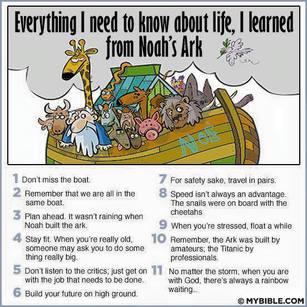
When my mother sent me this meme I immediately related to each one of the eleven lessons noted in it.  It made me think about the lessons that our children need to weather the real-life storms in their lives. 


The first type of storms our children will confront is that of “stormy emotions.”  In fact, psychologist Dr. G. Stanley Hall, called adolescence a period of “storm and stress” when teens are often moody, in conflict and even engage in risky behaviors. He deemed adolescence a period of lack of control, similar to a storm. Dr. Albert Bandura, in his paper, “The Stormy Decade: Fact or Fiction?”  actually cited research that indicated that most adolescents do not see their teenage years as stormy.  He feels that in fact parents are often concerned if they have positive relationships with their teens and are constantly bracing themselves for that stormy relationship to develop.   (If your teen is not storming- don’t be suspicious! Just be grateful!). 


Regardless, the teenage years are definitely times of change physiologically and hormonally.  We know that the prefrontal cortex,  (the area of the brain that controls reasoning and thinking before acting),  is still developing and teens tend to rely on the amygdala (associated with emotions, impulses and instinctive behaviors), to make decisions.  And, an intense dependence on peers, and fear of peer rejection can lead to emotional reactions.  So, adolescence is indeed full of some “stormy emotions.” (Of course, some degree of storm and stress is normal during this time, but if these behaviors are so extreme it may be time to consult a mental health practitioner).  


What I find to be wonderful in working with teens is that they can be very rational and insightful. But, when they are upset, they cannot connect with that rational side.  So, what to do when our teens are facing those stormy emotions?


  1.  Realize that there is often an underlying issue for the “storm” or tantrum. 

  2. We need to remain the calm in the storm. If our child is suffering, we may suffer with them. If they are yelling at us we may yell back. We are then joining our child in the emotional storm.  We need to take a break before we rush in to put out the fire. Allow the storm to settle.  This way we can avoid snapping at our children, or reacting angrily, which we might regret later. (And, of course, our children learn how to weather storms by seeing how the adults in their lives weather theirs).


Darcy Harbour, in her article “Calm In The Eye of Our Child’s Emotional Storm” talks about the importance of being a lighthouse for our children when they are storming.  Try to be an observer rather than a participant. This requires parents to employ our own emotion regulation skills. Take a deep breath and find our calm. We are the lighthouse and our child is the ship in distress. Let our calming light guide our child through the storm...Shine a light without getting on the boat”   In essence we are telling him/her “I am here and you are safe.”  We are here to help you find your way. 

  1. Validate, validate, validate.  Research in fact shows that by simply naming the emotions our children are feeling they will start to feel better.  No, “You’re overreacting!” or “Calm down already!”  When we tell them to suppress their emotions we are invalidating them.  We don’t have to agree with their feelings to validate them.  Sometimes just feeling heard helps them move on to “calmer waters.”

  2. We need to avoid blaming our children or ourselves for the storm that has ensued. 


Kayla Marnach in “Life Storms Are Going To Happen” notes that like weathermen, if we can predict the storm we can help our children prepare and not only weather it and survive, but thrive. 

  1.  Look for weather patterns. By knowing what causes difficulty for a child, you can head off potential problems by preparing the child with what is going to happen. Then you can work together to brain “storm” options to lessen the effects.

  2.  Be prepared. Just like you need to have an umbrella and galoshes for those rainy times, having a survival packet with you that contains a bottle of water, chewing gum, a fidget toy, even an online meditation app- whatever your child needs to self-regulate.   

  3. Choose your view. You can either attempt to run from the storm (deny it’s going to happen), be defiant in the face of it (make unreasonable demands of the child thereby creating more dysregulation), or embrace it, knowing that afterward a rainbow will come (love the child through it).

Some other techniques we can teach our children to help them weather stormy times in their lives are:

  1. Practice optimism- optimism is mostly learned.  It does not mean ignoring the reality of a difficult situation, but to view the challenge in a more hopeful way.  Optimism is most definitely contagious. 

  2. Positive self-talk. Reframe the negative that has happened.  

  3. Encourage our children to help others. One might assume that when going through tough times only receiving support from others helps. But, in fact, supporting others and moving outside oneself actually enhances one’s own resilience and helps a person get through adversity. 


At times, we need to allow the rain to continue to pour down.  In Tara Cousineu’s article “Finding Comfort In An Emotional Storm: The R.A.I.N. Technique”   she recommends the importance of R.A.I.N. when we or our teens are feeling overwhelmed.

R.- Recognize.  Recognize what is going on in your mind, your body- your emotions and sensations without any judgment.  At times we may want to name what is going on  “I feel resentful…” 


A.- Allow.  Allow your feelings to be there despite their being uncomfortable or painful.  Do not suppress what you are feeling. 


I.-  Investigate.  Investigate what you are feeling with kindness and care- no accusations.  Befriend yourself as you would care for another in an atmosphere of safety and understanding. 


N.-  Nurture/Nourish.  Take care of yourself.  And, N can also be non- attachment- take a step back and do not let your emotions hijack your reaction.  “RAIN allows you to find refuge from the emotional storm by a very deep inner sense of peace, comfort, and homecoming.”


In this week’s parasha it is a תיבה which saves Noach from “stormy waters.” This word תיבה is found elsewhere in the Torah by the story of baby Moshe as he is placed in a תיבה to also save his life.   The תיבה represents Hashem’s protection. As it says in Beraishit 9:16, after Noach brought all into the ark  : ויסגור ה’ בעדו, “And, G-d shut him in.”  Hashem Himself insulated Noach in the תיבה. Life will indeed be full of stormy times when we need to face turbulence and insecurity.  As, I have written before, reminding ourselves that G-d is always with us to care for us is another element which can contribute to our mental health, resilience and hope for the future.  As often and as much as we can reinforce and model this message with our children will contribute to their resiliency. 


The key to all the skills above, including the spiritual one noted in the previous paragraph, is to practice them when the seas are  calm and there is smooth sailing so that when the inevitable storm does arrive we are ready to face and ride the waves. 


Advisory Update:

Sixth Grade:  Students began a new unit on Time Management.


Seventh Grade: Students began a training session empathy skills. 


Eighth Grade:  Students continued with interview skills, including mock interviews.

Sunday, October 18, 2020

Facing Challenge Through Improvisation


Years ago I formed  relationship with Mrs. Staci Block who coordinates the Reflections Teen Theater Program-a division of Family Guidance of Bergen County Department of Human Services. Reflections is a volunteer teen theater program where the teens present improv- improvised scenes on social emotional topics.  Mrs. Block and her team have been performing for our sixth graders on topics that involve peer pressure.  After each scene is acted out, the actors stay in character and engage the students in an interactive discussion.  The actors then come out of their roles and share their own personal thoughts on the scenarios acted out.  

I had always thought of improv as an effective tool to relay social emotional skills as the students passively watched the performance.  I do, however, now realize that we as educators and parents do and should actively engage our children in “improv.”  


 Esther Rabi, in her article “Can’t Be Sure” writes how improv is a “script for embracing uncertainty. The actors have no scripts. They get up on stage without knowing what the performance will be about…Learning how they do it can give us the confidence to deal with the uncertainties of real life.”  In real life, there are no scripts. This time of the coronavirus is replete with uncertainty and  we are to a certain extent making it up as we go along. 


Rabi highlights some important tricks of the trade of improv actors that we can use in our real-life “improvisations.”  She stresses how essential these tips are especially now or during any times of uncertainty: 

  1.  Listen- Improvisation is not doable if the actors are not listening to one another.  Without truly listening to what others are saying we will not know how to act or react. 

  2. “Yes, and…”- This tip means that one must first accept what the other actor comes up with and then come up with his/her line.

  3. Collaborate-  Not only does an actor need to accept what the other has said, but now he/she needs to take it and build on it. 


Improvisers accept what others feel and say and are not judgemental. By collaborating with and supporting each other we can manage better...even or especially when we do not have a script. 


Interestingly enough, there has been recent research demonstrating that improvisation can be effectively utilized in mental health treatment and can help individuals cope with anxiety disorders and depression.  It is particularly helpful with social anxiety. Surveys with students with social anxiety indicated that after improv workshops they felt less social anxiety symptoms. Improv “forces” the participants to tolerate uncertainty.  Avoidance is also a component of anxiety disorders- as those with anxiety often avoid situations that make them feel uncomfortable and prefer situations that are more predictable.


 This therapeutic improv incorporates elements of exposure therapy. In exposure therapy the therapist creates a safe environment to expose the client to that which they fear and avoid. Slowly through controlled exposure psychologists create a safe environment in which to expose individuals to the things they fear and avoid, which will lessen their fear of the situation. Peter Felsman, one of the organizers of therapeutic improv workshops through his program Nobody’s Business, says that the improv allows them a safe place to practice exposure to the uncomfortable situations and repeated exposure to the unknown. In improv actors act in the moment and cannot spend time worrying about how it will turn out. The improv ensures that the participants are not engaging in avoidance, which often prevents them from overcoming their anxiety.  He notes that also “unconditional positive regard”  in improv also helps in that improvisers must “agree with each other’s realities and then add onto the scene in order for the improvised scenes to develop.”  They accept each other's comments without judging.  “Most of us experience some form of not being good enough, and improv provides a unique environment where, not only are you good enough, but you’re 100 percent accepted. This acceptance and positive experience allows people to step out of their comfort zones, experiment, and experience situations they might normally avoid due to their anxiety disorders.”  While engaging in the role play of improvisation the actors learn to become more spontaneous and adaptable on the “stage of life.” 


We as parents and educators can use improvisation in our homes to help our children practice so they can react in beneficial ways on that “stage of life.” We might also call this educational tool “role play.”  When our children are about to face a situation that might be a challenging one for them it is a good idea to have them prepare and practice what they might do and say.  We utilize this technique in our Advisory classes, but it is most definitely a technique to use at home. For example, just this week in our 8th grade Advisory classes we did interview role plays where the students were able to practice without a script. A few weeks ago we role played with our sixth graders how to have a conversation.  We spend time role playing how to communicate with a friend when you are unhappy with what he/she is doing. How to resist peer pressure- i.e. when you are at a party and things are going on of which you don’t approve...we practice how to “say no” without antagonizing your friends.  We role play how to react when you see someone else being picked on or excluded. 


 Practicing before having to actually face these challenging situations allow the reactions to become more automatic and even more natural.  If your child needs to approach a teacher about an issue, it is a wonderful idea to have them role play with you so he/she can practice.  If your child is in a texting feud with a friend, practicing with you how to have a conversation with him/her may be essential for having him/her feel at ease.  Or even little things, like role playing how to greet an adult and how to say thank you after a carpool or how to accept a compliment are all things we take for granted, but our children often need to practice. 


As parents, if we are worried about how our children will react when faced with certain dilemmas and what choices they will make in certain situations, we can do a role play with them before they are faced with those challenges. We can tell them verbally over and over how to react in situations, but often role playing can be helpful. This is one reason why each year we do our “mock Bar/bat mitzvah” event where our sixth graders have the opportunity to practice that which we discuss in Advisory about appropriate behavior at smachot. In fact, it is also a great idea to supplement the role play we do with your children with role playing how to be a host at a simcha, i.e.  how to react to a Mazel tov, how to interact during the dancing, what to do after the rabbi speaks etc. Before your child goes to his first tween/teen party, role play situations that you think might pop up.  Or, before sending him/her to sleepaway camp for the first time, when he/she won’t have you there to consult, role play some situations that might ensue.  The more our children actively practice the skills they need to face challenging situations, the more ingrained those skills and actions become.  They can then more comfortably face those situations in real-time.


But, how can we ensure that our children will actually implement what they have practiced when faced by the situations in real-life?  If we practice over and over, eventually they will become natural and part of who they are.


The importance of acting out scenarios and situations so that they are ingrained and part of our psyche is stated clearly in the Sefer HaChinuch Mitzvah 16.   “  כי אחרי הפעלות נמשכים הלבבות “ “A person is formed by his actions.”  Our external actions affect our inner feelings and reactions.  One might think that how you feel inside affects how you act.  The Sefer HaChinuh highlights an important psychological phenomenon- that it is the opposite-  the way we act often affects how we feel. As he explains, “You must know, that a man is acted upon according to his actions; and his heart and all his thoughts always follow after the actions that he does - whether good or bad... And from that which is not for its own sake comes that which is for its own sake [as opposed to being for personal gain]; for the hearts are drawn after the actions.”  


We know that one needs to practice, practice, practice as noted in the Rambam Hilchot Deot, 1:7. The Rambam asks how can we ensure that positive character traits become part of who we are- even ones that we do not naturally have and need to work on?  “How can one train himself to follow these temperaments to the extent that they become a permanent fixture of his [personality]? He should perform - repeat - and perform a third time - the acts which conform to the standards of the middle road temperaments. He should do this constantly, until these acts are easy for him and do not present any difficulty. Then, these temperaments will become a fixed part of his personality.”  We need to stress to our children that every skill is at first difficult, but becomes easier with practice. 


And, so while when we role play these situations with our children, it may not be what they would be naturally inclined to do at first, but once they practice over and over, eventually these reactions will be part of their personality. 


(One other area where children “role play” which may not be positive for them is when they play a role on social media.  Teens often create fictional personas of themselves online as they interact with people they may not really know. They may be people that are deemed “safe”- friends of their friends from camp etc., but people they have not met.   While hopefully not dangerous, we may want to question whether it is healthy for children to engage in fictional posts. This all comes down to monitoring our children’s social media use, as we hopefully are doing already, so we can assess what is fun and harmless and what is not).  


Overall, we have learned these past months that we cannot foresee what will happen, but we can prepare our children and ourselves to prepare for the unforeseen.   We can help them learn how to react when there is no script.  The world is full of situations that are beyond our control, but one variable we can control is how we respond.  Through improv or role play we can train our children to think through scenarios in their heads and consider, “If I do this then this and this will happen.”  They can evaluate the situations in a non-threatening situation before they are faced with the stress of reacting in the moment in real-life.   


Advisory Update:


Sixth Grade:  Sixth graders began a new unit in Advisory on Time Management. They “got to know” their planners better this week. 


Seventh Grade:  Our seventh graders began a new unit called Operation Respect.  The goal of this unit is to inculcate skills of empathy through developing a relationship with a homeless shelter in Hackensack. The students  had an incredible live zoom presentation from Ms. Adelina Garabet who introduced the students to the homelessness in Bergen County, what issues they are facing and what the shelter does to help the homeless get back on their feet. 


Eighth Grade:  Students learned “interview smarts” where they discussed some interview tips- for both in-person and virtual interviews, and had the chance to do some role-playing.